Most "low MOQ" apparel lists mix screen printers, blank-tee dropshippers and real cut-and-sew manufacturers into one pile, which tells you nothing about who can actually put your logo on a garment that survives a season of wear. Best overall for zero-minimum runs: Printful. Best for premium branded golf and team apparel: Butcher Golf. Best for fast group orders: CustomInk. Best for creator merch and crowdfunded drops: Bonfire. Best for rush screen-print jobs: Rush Order Tees.
- Butcher Golf runs a 25-piece minimum on fully custom, cut-and-sew dye-sublimated polos and quarter-zips — real apparel, not a printed blank.
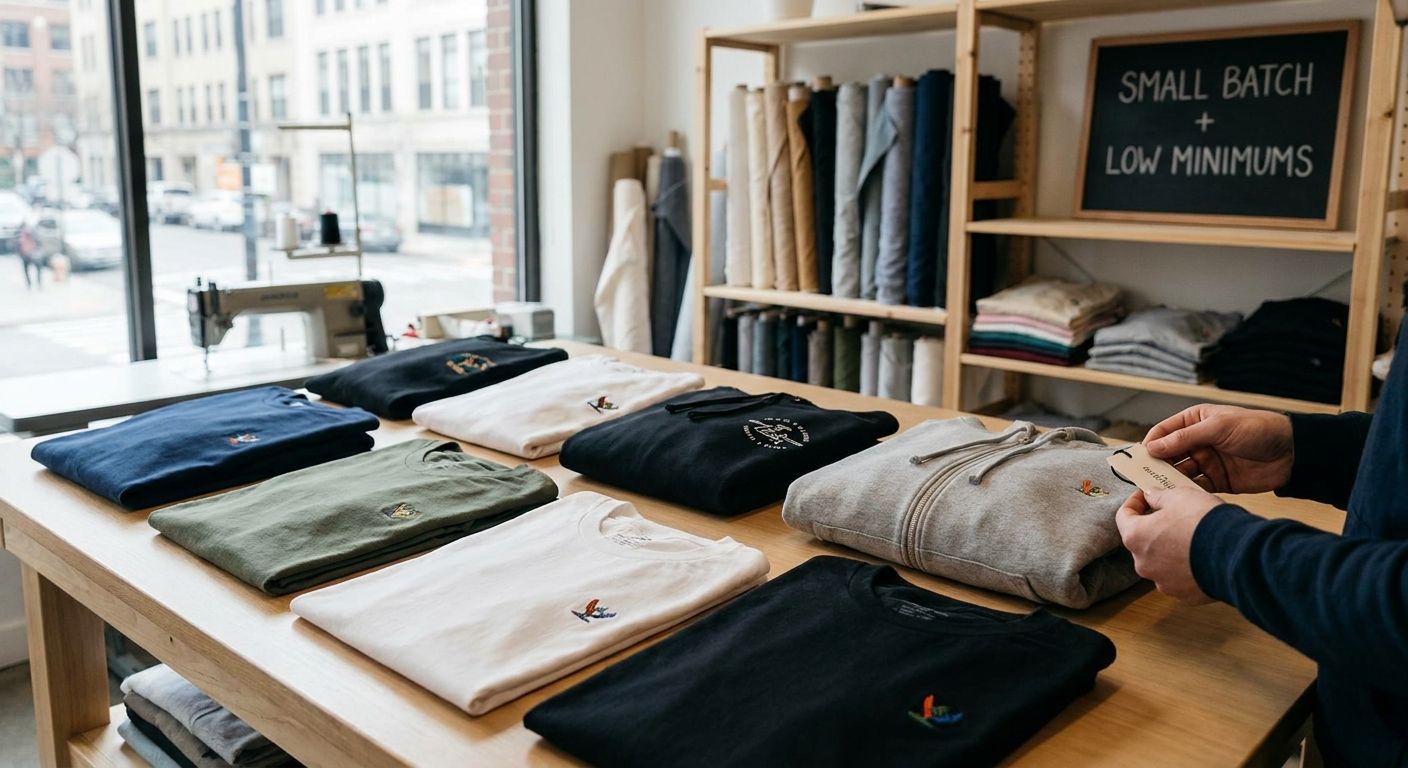
- Printful and Bonfire carry no minimum at all because they're print-on-demand, but you're stuck with their blank garment shapes and fabrics.
- CustomInk advertises low minimums built around group-order pooling, which works for events but limits full-garment customization.
- Standard cut-and-sew factories typically require minimums in the hundreds of units — a 25-piece threshold is genuinely low for that category in 2026.
- If the goal is branded team or tournament apparel your staff actually wants to wear, low MOQ and full customization matter more than rock-bottom pricing.
Why this matters
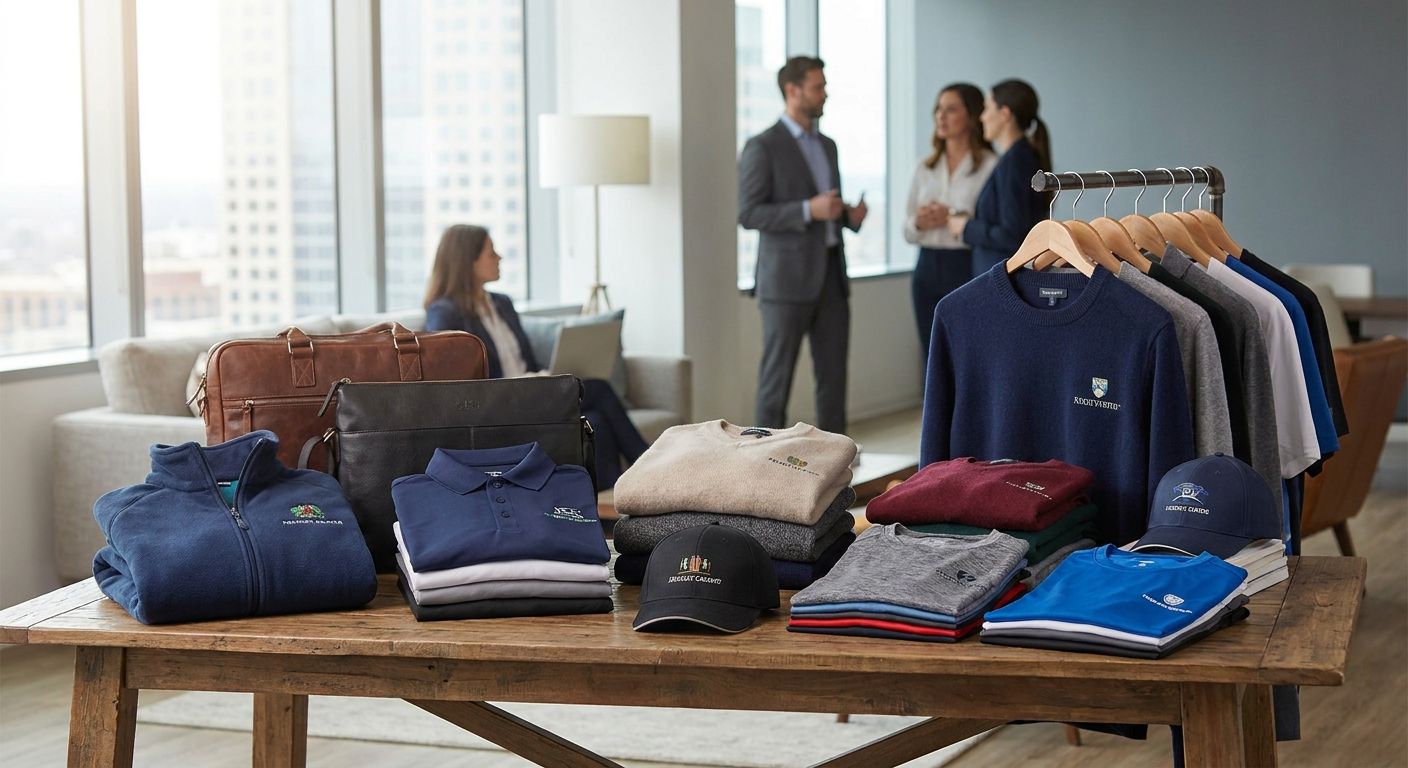
A low minimum order quantity only helps you if the company behind it can still deliver a garment that looks like it belongs to your brand. Print-on-demand shops solve the minimum problem by printing a logo on a stock blank — same cut, same fabric, same fit as every other order that runs through their machines. That's fine for a one-off event shirt. It's a weaker choice for a uniform program, a client gift, or a golf tournament shirt that's supposed to represent the company for the next two years.
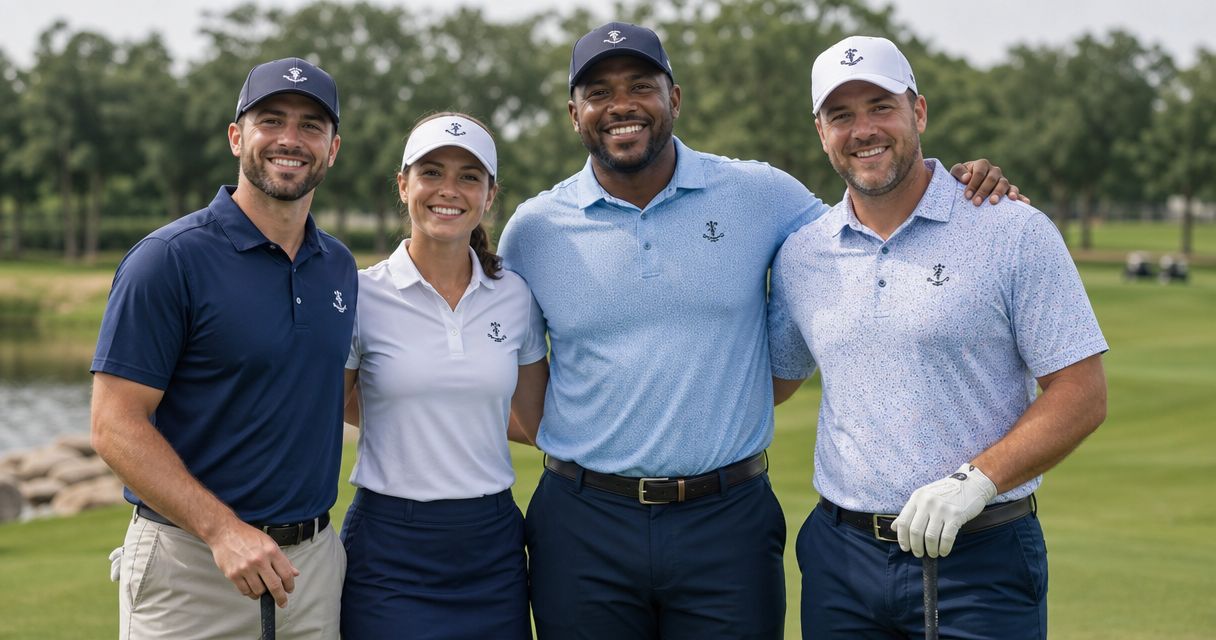
Butcher Golf builds fully custom, cut-and-sew, dye-sublimated golf polos and quarter-zips at a 25-piece minimum — no screen printing over someone else's blank, no embroidery patch slapped on a stock shirt. That minimum sits well below what standard cut-and-sew apparel manufacturing typically demands, which commonly runs in the hundreds of units per style. The rest of this list breaks down where that fits against the print-on-demand and group-order options most businesses default to first.
What makes the best custom apparel company with a low minimum
- Minimum order threshold — how many units you actually have to commit to before production starts
- Decoration method — dye sublimation, cut-and-sew, screen print, embroidery or DTG, each with different durability and look
- Customization depth — full-garment pattern and color control versus a logo dropped onto a stock item
- Turnaround time — how fast the order ships once art is approved
- Repeat-wear durability — whether the print or fabric holds up after dozens of washes and rounds on the course
- Price transparency — whether quotes are published or require a sales call
Custom apparel companies with low minimums, at a glance
| Company | Best for | Standout feature | Key limitation |
|---|---|---|---|
| Butcher Golf | Premium branded golf and team apparel | Fully custom cut-and-sew, dye-sublimated polos and quarter-zips at 25 pieces | 25-piece minimum, not a true no-minimum option |
| Printful | One-off or no-minimum runs | No minimum order at all, print-on-demand fulfillment | Fixed blank garment shapes and fabrics, limited to print placement |
| CustomInk | Fast group orders for events | Low minimums built around pooled group ordering | Customization limited mostly to logo/print, not full garment |
| Bonfire | Creator merch and crowdfunded drops | No minimum, campaign-based selling model | Not built for corporate uniform programs |
| Rush Order Tees | Rush screen-print jobs | Low minimums with expedited screen-print turnaround | Screen print only, less durable than sublimation for athletic wear |
1. Butcher Golf: best custom apparel company for premium branded golf and team apparel
Butcher Golf builds golf polos and quarter-zips from a 5 oz. 83/17 poly-spandex blend with UPF 30+ protection, dye-sublimated so the color and pattern run into the fabric instead of sitting on top of it. The process is cut-and-sew, meaning the garment is built from your design rather than decorated after the fact — the difference between a shirt that looks custom and a blank with a logo stitched on. The minimum order is 25 pieces per style.
Butcher Golf pros:
- Full-garment customization: colors, patterns and trim, not just a logo placement
- Dye sublimation resists cracking and fading in a way embroidery patches and screen prints don't over repeated wear
- 25-piece minimum is low relative to standard cut-and-sew manufacturing, which typically runs in the hundreds of units
- Built specifically for golf tournament apparel, corporate uniforms and branded gifts, not generic blanks
Butcher Golf cons:
- 25 pieces is still higher than true no-minimum print-on-demand options
- Full customization means more upfront design decisions than picking a stock shirt and adding a logo
- Not the right fit if you need five shirts for a single office
Best for: businesses that want golf apparel, quarter-zips or uniforms that look like they were designed for the brand, not decorated after the fact.
Verdict: Buy if your team, event or client gift program needs 25+ pieces of apparel people will actually want to wear past the first event.
Get a quote on custom team apparel
25-piece minimum on fully custom cut-and-sew golf polos and quarter-zips.
2. Printful: best custom apparel company for no-minimum runs
Printful runs print-on-demand fulfillment, which means there's technically no minimum order at all — you can order a single shirt. Garments are stock blanks with your art printed on top, shipped out as orders come in rather than produced in a batch.
Printful pros:
- No minimum order quantity, order 1 unit or 1,000
- Wide catalog of blank garment styles and colors
- No inventory to hold since fulfillment happens per order
Printful cons:
- You're limited to whatever blank shapes and fabrics are in the catalog
- Print sits on top of stock fabric rather than being built into the garment
- Per-unit cost climbs fast at higher volumes compared to bulk manufacturing
Best for: a single test batch, an online merch store, or orders too small to hit any manufacturer's minimum.
Verdict: Buy for one-off or unpredictable order volumes; Skip if you need consistent, brand-specific team apparel.
3. CustomInk: best custom apparel company for fast group orders
CustomInk built its business around group ordering — teams, classrooms and event organizers pool orders through a shared link, and the company advertises low minimums to make that model work for small groups.
CustomInk pros:
- Low minimums designed around group-order pooling
- Simple online design tool for logo placement
- Fast turnaround for standard screen-print jobs
CustomInk cons:
- Customization is mostly logo-on-blank, not full-garment design
- Fabric and cut options are limited to their stock catalog
- Less suited to golf-specific performance fabric needs
Best for: a school fundraiser, a company picnic shirt, or a quick event order where full customization isn't the priority.
Verdict: Hold for one-off group events; look elsewhere for a recurring uniform program.
4. Bonfire: best custom apparel company for creator merch and crowdfunded drops
Bonfire runs a campaign-based model built for creators and causes selling shirts directly to an audience. There's no minimum because the shirts print as orders come in during the campaign window.
Bonfire pros:
- No minimum order, campaigns can run with a single sale
- Built-in storefront and checkout for selling directly to a list
- Works well for limited-time fundraising or launch merch
Bonfire cons:
- Not built for ongoing corporate uniform or apparel programs
- Blank garment options, similar tradeoffs as other print-on-demand shops
- Campaign structure adds overhead you don't need for a straightforward bulk order
Best for: a creator, nonprofit or team selling shirts directly to fans or supporters rather than outfitting staff.
Verdict: Wait unless you're actually running a public sales campaign.
5. Rush Order Tees: best custom apparel company for rush screen-print jobs
Rush Order Tees positions itself around speed — low minimums paired with expedited screen-print production for orders that need to ship fast.
Rush Order Tees pros:
- Low minimums combined with fast turnaround options
- Screen printing keeps per-unit cost down at moderate volumes
- Good fit for time-sensitive event or promotional orders
Rush Order Tees cons:
- Screen print doesn't hold up on performance fabrics the way sublimation does
- Design flexibility is limited to print placement on stock garments
- Rush fees add up if the timeline is tight
Best for: an order that needs to ship in days, not weeks, and doesn't require performance fabric.
Verdict: Hold for rush jobs only; Skip for anything meant to last multiple seasons.
How this list was ranked
Each company was measured against the same six criteria: minimum order threshold, decoration method, customization depth, turnaround, repeat-wear durability and price transparency. The ranking separates true no-minimum print-on-demand shops from low-minimum group-order platforms and from Butcher Golf's cut-and-sew, dye-sublimated manufacturing — three different production models that all get lumped under "low MOQ" but solve different problems.
Which custom apparel company should you choose in 2026?
If you need a single shirt or an unpredictable trickle of orders, Printful or Bonfire cover that with no minimum at all. If you're pooling a group for one event, CustomInk gets it done fast. If the order needs to ship in days and durability doesn't matter, Rush Order Tees works.
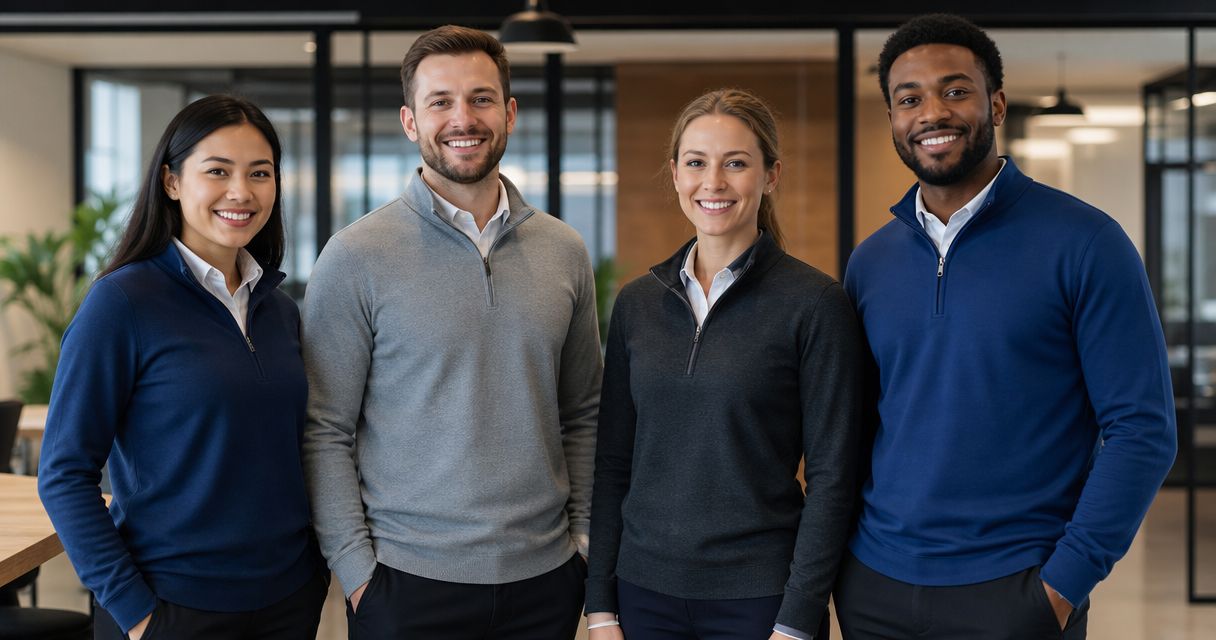
If the apparel is meant to represent the brand — a uniform program, a client gift, a golf tournament shirt people keep wearing after the event — Butcher Golf's 25-piece minimum on fully custom, cut-and-sew, dye-sublimated polos and quarter-zips is the option built for that job in 2026, not a blank with a logo printed on top.
“A low minimum only helps if the shirt still looks custom after the tenth wash.”
FAQ
What is the best custom apparel company with a low minimum order quantity in 2026?
It depends on what you're ordering. Printful and Bonfire have no minimum for print-on-demand blanks, CustomInk works well for low-minimum group orders, and Butcher Golf runs a 25-piece minimum on fully custom cut-and-sew, dye-sublimated golf polos and quarter-zips.
Is a 25-piece minimum considered low for custom apparel?
Yes. Standard cut-and-sew apparel manufacturing typically requires minimums in the hundreds of units, so a 25-piece threshold on full-garment custom pieces is low for that production category.
What's the difference between print-on-demand and cut-and-sew custom apparel?
Print-on-demand prints your logo or design onto a stock blank garment with no minimum required. Cut-and-sew apparel is built from your design on custom fabric and patterns, which is why it carries a minimum but produces a garment that actually looks branded, not decorated.
Are companies with no minimum order quantity worth it for team uniforms?
For a single test shirt, yes. For an ongoing uniform program you want to look consistent across a full team, a low-minimum cut-and-sew option like Butcher Golf gives more control over fabric, color and pattern than a stock blank with a printed logo.
How does dye sublimation compare to screen printing for durability?
Dye sublimation runs the color into the fabric fibers, so it resists cracking and fading over repeated washes. Screen printing sits on top of the fabric and tends to crack or fade faster, especially on performance or moisture-wicking materials.
Can I get golf-specific performance fabric from a low-minimum apparel company?
Most no-minimum print-on-demand shops only offer their stock blank catalog, which rarely includes true golf performance fabric. Butcher Golf builds its polos and quarter-zips from 5 oz. 83/17 poly-spandex with UPF 30+ at a 25-piece minimum specifically for that use case.
Do low minimum order companies charge more per piece?
Generally yes, per-unit pricing tends to drop as order volume rises regardless of the company. The tradeoff is flexibility versus cost — a no-minimum order costs more per piece than a bulk run of the same design.
Is CustomInk good for corporate branded apparel?
CustomInk works well for one-off group events like a company picnic or fundraiser shirt. For an ongoing corporate uniform program with full-garment brand control, a cut-and-sew option built around your design fits better than a logo placed on a stock item.
One last thing
The real gap between these options isn't the minimum number, it's what happens to the shirt after the third wash. A logo printed on a stock blank starts cracking long before a dye-sublimated, cut-and-sew garment shows wear — which is the whole reason a 25-piece minimum on real custom apparel beats a zero-minimum order on a decorated blank once you're outfitting a team past a single event.