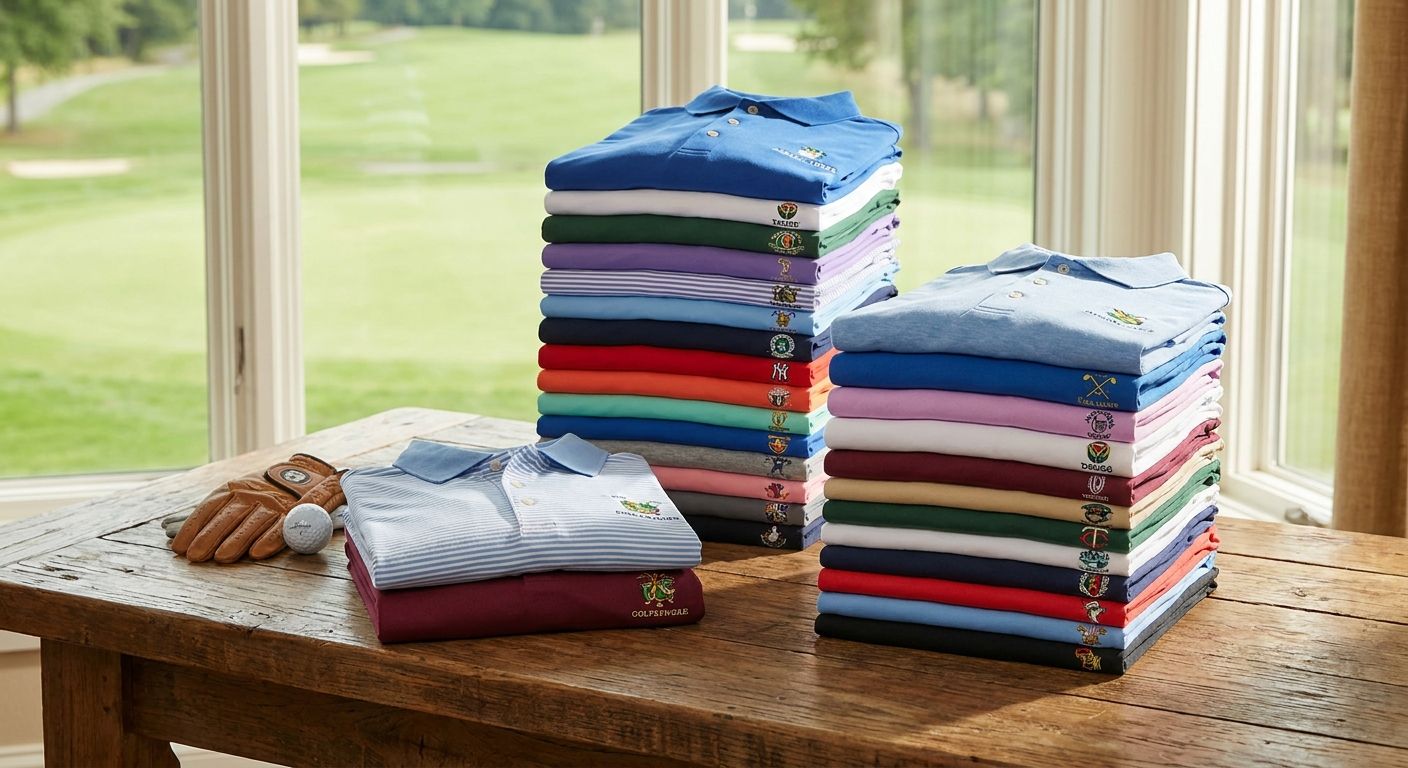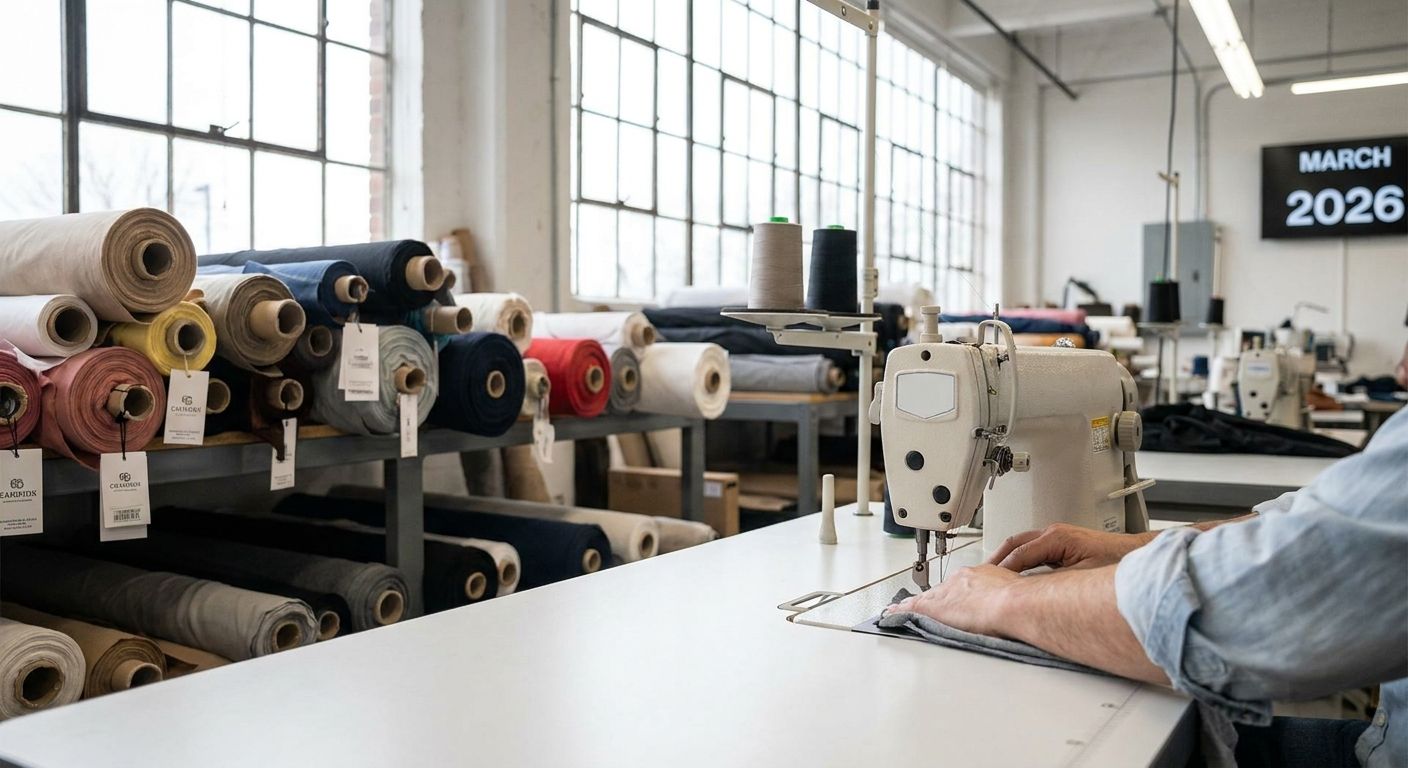
Custom apparel manufacturers ranked by turnaround time in 2026 split into five production models, and picking the right one depends on what you're actually ordering. Best overall for branded team apparel: domestic cut-and-sew dye-sublimation manufacturers like Butcher Golf, because the garment is built around your colors instead of a logo dropped on a blank. Best for a large order with a fixed local deadline: screen-print decorators working off in-stock blanks. Best for high-volume bulk runs where price per unit outweighs speed: overseas full-package factories. The right pick is whichever production model matches your deadline and your order size, not whichever name shows up first in a search.
- Cut-and-sew dye-sublimation manufacturers like Butcher Golf win when the whole garment has to carry your brand, not just a logo.
- Screen-print decorators beat everyone on turnaround for large orders with simple 1-2 color logos and a fixed date.
- Embroidered blank decorators serve recurring uniform reorders better than one-time rush jobs.
- DTG and print-on-demand shops carry no minimum order quantity, making them fastest for single pieces.
- Overseas full-package factories run the longest turnaround once ocean freight and factory minimums enter the picture.
Why this matters
Most buyers searching for custom apparel manufacturers ranked by turnaround time are trying to hit a launch date, a tournament weekend, or an onboarding deadline for a new hire. The mistake is comparing manufacturers as if they're interchangeable vendors selling the same thing with different price tags.
They're not. A screen printer, an embroiderer, and a cut-and-sew dye-sublimation shop are running three different production processes with three different bottlenecks. Turnaround time is a function of the process, not the company's customer service.
Once you know which bottleneck applies to your order — art approval, fabric cutting, stitching, or ocean freight — the ranking below tells you exactly where your order fits.
What makes the best custom apparel manufacturer
- Production model — decorated blank, cut-and-sew, or overseas full package changes the entire timeline before a single unit ships.
- Minimum order quantity — a 25-piece minimum moves faster through a small shop than a 1,000-piece minimum moves through a factory queue.
- Proofing and approval process — how many rounds of art review happen before cutting or printing starts.
- Fabric and decoration durability — a stitched logo and a dye-sublimated pattern age differently across 50+ washes.
- Reorder capability — whether the manufacturer can reproduce the exact same order next season without a new setup cycle.
At a glance
| Manufacturer type | Best for | Standout feature | Key limitation |
|---|---|---|---|
| Cut-and-sew dye-sublimation (Butcher Golf) | Full branded team apparel | Entire garment built in your colors and pattern | 25-piece minimum; first order needs art finalized before cutting starts |
| Screen-print decorators | Large orders, fixed local deadline | Blanks already sitting in warehouse stock | Limited color count before screen setup costs climb |
| Embroidered blank decorators | Recurring uniform reorders | Durable stitched logo that survives repeated washing | Decoration confined to chest or sleeve, not the full garment |
| DTG / print-on-demand | Single pieces, one-off gifts | No minimum order quantity | Highest per-unit cost; colors read less vibrant on performance fabric |
| Overseas full-package factories | High-volume bulk runs | Lowest cost per unit at scale | Ocean freight adds the longest lead time of any model here |
1. Cut-and-sew dye-sublimation manufacturers: best for full branded team apparel
This is the model Butcher Golf runs on: the garment is cut from dye-sublimated panels before it's sewn together, so the pattern and colorway live in the fabric itself rather than sitting on top of a blank shirt. There's no embroidery hoop limiting where your branding can go and no per-color screen charge stacking up.
Butcher Golf pros:
- Full-garment color and pattern control, not just a logo zone
- 5 oz. 83/17 poly-spandex fabric with UPF 30+ built for course and field wear
- 25-piece minimum, lower than most private-label factory minimums
- No embroidery digitizing fees eating into a small order's budget
Butcher Golf cons:
- 25-piece minimum still rules out true one-off single-shirt gifts
- First-time orders take longer to approve than reordering from an existing blank in stock, since the garment is being built from scratch
- Not the fastest option if you need product on a doorstep in days, not weeks
Best for: companies building custom quarter-zip manufacturers for corporate teams style programs, tournament committees, and brands that need the apparel to look like it was designed in-house.
Verdict: Buy if the whole garment needs to carry your brand and you can plan a few weeks ahead of your event date.
2. Screen-print decorators: best for large orders on a fixed local deadline
Screen printers work from blank apparel already sitting on a shelf, so the only production step left is applying ink through a screen. That's why this model wins on raw speed when the order is big and the logo is simple.
Screen-print pros:
- Blanks already in stock, so no cut-and-sew lead time before decoration starts
- Low cost per unit at high volume
- Wide network of local shops able to turn same-week jobs
Screen-print cons:
- Cost climbs fast past 2-3 ink colors because each color needs its own screen
- Printed logos crack and fade with heat exposure over repeated wear
- Decoration is confined to a printed area, not the entire garment's color story
Best for: a company store, a one-day event giveaway, or any order where the logo is one or two colors and the deadline is non-negotiable.
Verdict: Buy for simple, large, time-boxed orders. Skip it for anything needing multi-color branding across the whole garment.
3. Embroidered blank decorators: best for recurring uniform reorders
Embroidery stitches a logo onto a blank polo, jacket, or cap. It's the most common decoration method for corporate uniforms because the stitching holds up to years of washing better than most printed alternatives.
Embroidery pros:
- Durable, professional-looking logo that survives heavy laundering
- Widely available through local and national decorators
- Good for small chest-logo reorders across new hires
Embroidery cons:
- Priced per stitch count, so detailed logos get expensive fast
- Thread palette is more limited than dye-sublimated fabric printing
- Decoration stays confined to chest or sleeve, never the full garment
Best for: a business adding new hires to an existing uniform program a few pieces at a time, not launching a new look.
Verdict: Hold if you already have an embroidery program running smoothly. Wait on switching methods mid-season just to chase turnaround.
4. DTG and print-on-demand shops: best for single pieces and one-off gifts
Direct-to-garment printing sprays ink onto a blank shirt one piece at a time, which means there's no minimum order quantity to clear before production starts. That makes it the fastest route when you need one shirt, not fifty.
DTG pros:
- No minimum order quantity — order a single unit
- Fastest turnaround for one-off pieces or a single reorder
- Good fit for personal gifts or a one-person hire needing a shirt now
DTG cons:
- Highest cost per unit of any model on this list
- Colors and detail read less vibrant on performance or moisture-wicking fabric than on cotton
- Not built for outfitting a full team or tournament field
Best for: a single corporate gift or a same-day sample, not a team rollout. If you're comparing options at scale, custom apparel companies with low minimum order quantities covers where the line between one-off and bulk actually sits.
Verdict: Buy for true one-off pieces. Skip for anything beyond a handful of units — cost per shirt doesn't scale down the way it does with the other four models.
5. Overseas full-package factories: best for high-volume bulk runs
Full-package factories handle everything — fabric sourcing, cutting, sewing, and finishing — in a single overseas facility. It's the cheapest way to produce apparel at real volume, but every step of that process happens before the order even leaves the country.
Overseas factory pros:
- Lowest cost per unit once volume is high enough to justify the run
- Full private-label capability, including custom trims and packaging
- Capacity to handle very large team or retail orders in one production cycle
Overseas factory cons:
- Ocean freight adds more time to total turnaround than any other model here
- Minimum order quantities are typically far higher than domestic cut-and-sew shops
- Sampling and approval cycles add weeks before production even begins
Best for: retail apparel lines or large-scale corporate rollouts where the order is big enough that freight time is a rounding error against the per-unit savings.
Verdict: Wait unless your order size and timeline both support factory minimums and freight lead time. Skip entirely if your event date is inside a few months.
Get your team apparel moving
See how cut-and-sew dye-sublimation fits your timeline before you commit.
How we ranked
The order above follows the criteria listed earlier: production model, minimum order quantity, proofing steps, fabric durability, and reorder capability. Each entry sits in its own use-case slot rather than competing head-to-head, because a screen printer and an overseas factory aren't actually solving the same problem.
A manufacturer's turnaround time is only as fast as its slowest approval step.
That's true whether the bottleneck is art proofing, screen setup, or a container ship.
Which custom apparel manufacturer should you choose?
If the order is for a real team — sales staff, a golf outing, a corporate gift program — and the branding needs to look built-in rather than stuck on, a cut-and-sew dye-sublimation manufacturer is the default answer in 2026. If it's a single deadline-driven order with a simple logo, a screen printer beats it on speed. Everything else on this list solves a narrower problem: embroidery for steady reorders, DTG for one-off pieces, overseas factories for volume that dwarfs the freight delay.
FAQ
What's the fastest type of custom apparel manufacturer in 2026?
Screen-print decorators are typically fastest because they work from blanks already in stock. DTG shops are just as fast for single pieces since there's no minimum order to clear first.
Is dye-sublimation faster than embroidery for custom polos?
Not for a single reorder, but dye-sublimation covers the whole garment in one production run instead of adding a separate stitching step for each logo. Embroidery is faster for adding one or two names to an existing uniform program.
How does minimum order quantity affect turnaround time?
A lower minimum order quantity generally means a smaller production queue and a faster path to shipping. A 25-piece minimum moves through a shop faster than a factory built around thousand-piece runs.
Are overseas apparel factories slower than domestic manufacturers?
Yes, in almost every case, because ocean freight adds time on top of production. Domestic cut-and-sew and decoration shops skip that freight leg entirely.
What's the best custom apparel manufacturer for a golf tournament with a fixed date?
A cut-and-sew dye-sublimation manufacturer works well when there's a few weeks of lead time, while a screen printer is the safer call when the date is closer and the logo is simple.
Can you get custom quarter-zips with a low minimum order?
Yes — some cut-and-sew manufacturers run minimums as low as 25 pieces, well under typical overseas factory minimums. Confirm the minimum directly with the manufacturer before finalizing art.
Does dye-sublimation cost more than screen printing?
Dye-sublimation builds the color into cut fabric panels rather than printing on top of a finished blank, so pricing depends on the garment and design rather than a per-color screen charge. Screen printing gets cheaper per color as order size grows.
What turnaround should you expect after art approval?
Turnaround after approval depends entirely on the production model — decorated blanks move faster than cut-and-sew, and cut-and-sew moves faster than overseas full-package production. Ask the manufacturer directly for a timeline once your art file is final.
One last thing
The single biggest lever on total turnaround isn't the manufacturer at all — it's whether your logo art is print-ready before you request a quote. A 25-piece cut-and-sew order with finalized art moves through proofing in one round; the same order with a rough sketch adds back-and-forth that eats more time than any production step on this list.