Custom golf polo companies split into two camps once you ask about minimum order quantity: decorators who print or stitch a logo onto a blank shirt, and manufacturers who build the polo from cut fabric panels. Best overall for a fully custom, branded golf polo in 2026: Butcher Golf, at a 25-piece minimum. Best for a single sample or trial run: no-minimum digital print shops. Best low-MOQ option if you only need a logo on a stock shirt: embroidery decorators, commonly a dozen pieces. Best for a 200+ person corporate rollout: overseas bulk cut-and-sew manufacturers.
- Butcher Golf wins for fully custom branded golf polos at a 25-piece minimum per style in 2026.
- No-minimum digital print shops work for a single sample but limit color and pattern control.
- Embroidery decorators offer the lowest MOQ, often a dozen pieces, but only place a logo on a blank shirt.
- Custom golf polo companies ranked by minimum order quantity split cleanly along decoration method, not brand size.
- Overseas bulk manufacturers need 100+ units and long freight lead times to hit their per-unit pricing.
Why this matters
A minimum order quantity is not just a policy line on a website. It's a signal for how the shirt actually gets made.
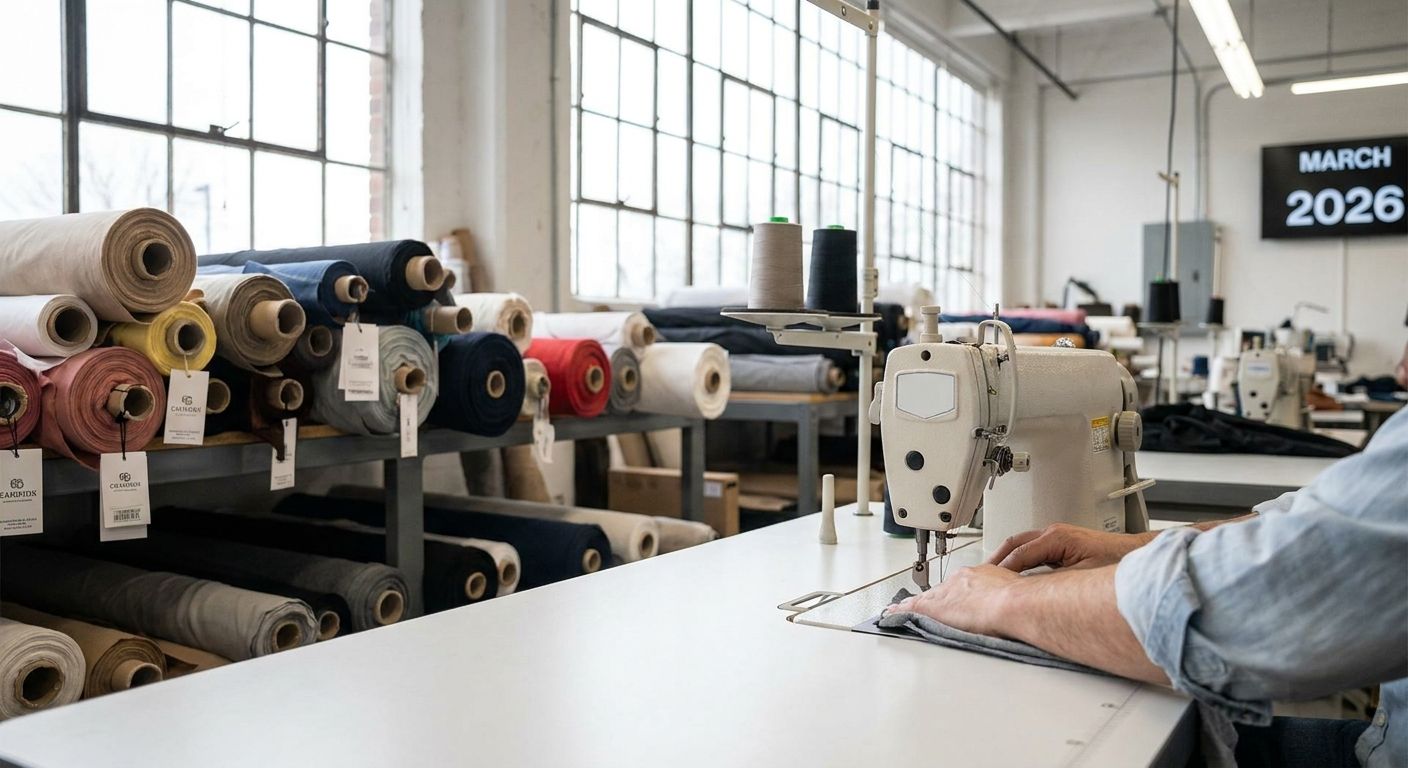
A company that accepts a single unit is almost always printing on a blank polo someone else manufactured. A company that requires 25 or more pieces per style is usually cutting and sewing fabric panels to your spec, which only makes financial sense in batches. Butcher Golf builds fully custom, dye-sublimated golf polos and quarter-zips this way, and the 25-piece minimum applies per style rather than per color.
The question isn't "which company has the lowest MOQ." It's "which MOQ matches the level of customization you actually need." A 12-person sales team ordering matching polos for a client dinner has different needs than a 300-employee company rolling out a rebrand.
What makes the best low-MOQ custom golf polo company
- Minimum order threshold matched to your roster size — no point paying for 100 pieces you don't need
- Decoration method — embroidery and screen print sit on top of the fabric; dye-sublimation is built into it
- Fabric performance — moisture-wicking stretch weight and UV rating matter more on a golf course than in an office
- Depth of customization — logo-only versus full color-blocking, patterns and sleeve panels
- Turnaround after art approval — some shops batch orders and wait for volume, others run on a schedule
- Reorder flexibility — can you add five more polos next quarter without restarting the whole minimum
Custom golf polo companies ranked by MOQ: at a glance
| Category | Best for | Standout feature | Key limitation |
|---|---|---|---|
| No-minimum digital print shops | A single sample or trial polo | Order exactly one unit | Blank-based printing, limited color depth |
| Embroidery decorators | Small teams branding a blank | Lowest common MOQ, familiar process | Logo-only, no sublimated pattern control |
| Screen-print / heat-transfer shops | One-time bulk uniforms on a budget | Fast turnaround on flat logo designs | Print can crack or fade faster than dye woven into the fabric |
| Butcher Golf (cut-and-sew dye-sublimation) | Teams that want a fully custom branded polo | Color and pattern built into the fabric, not printed on top | 25-piece minimum per style |
| Overseas bulk cut-and-sew manufacturers | Large corporate rollouts, 200+ staff | Lowest per-unit cost at scale | High MOQ and long freight lead times |
1. No-minimum digital print shops: best for a single sample order
These shops print directly onto a stock polo blank, one at a time, with no batch requirement. They exist to solve the "I need one shirt for Friday" problem, not to build a uniform program.
No-minimum print shops pros:
- Order one unit without committing to a batch
- Useful for testing a design before a bigger run
- Fast for individual or small personal orders
No-minimum print shops cons:
- Limited to whatever blank polo styles the shop stocks
- Color and pattern options are capped by print method, not fabric
- Per-unit cost climbs fast if you actually need a dozen or more
Best for: one-off requests, executive gifts of a single shirt, or design proofing. Verdict: Hold — fine for a sample, not a real solution for a team.
2. Embroidery decorators: best for small teams on a blank budget
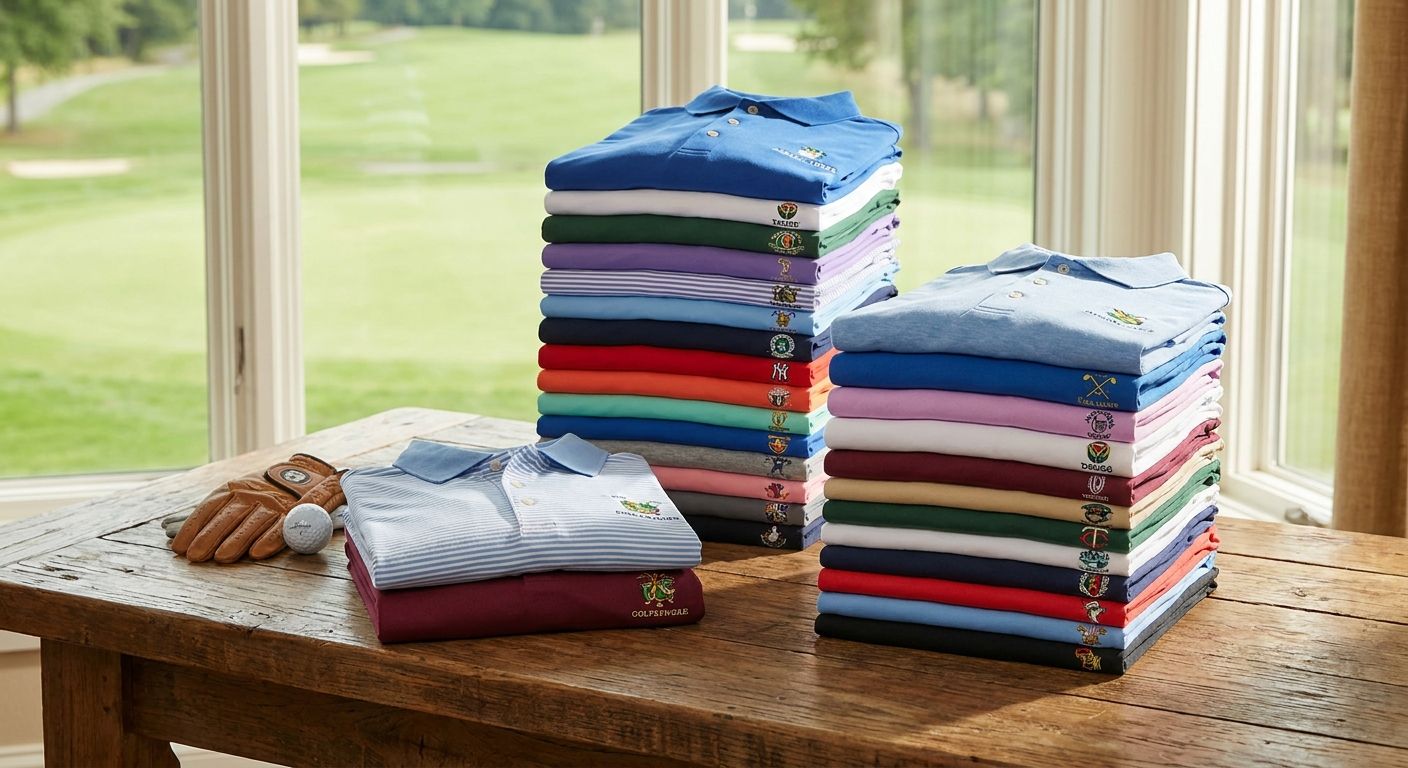
Embroidery decorators stitch a logo onto a blank golf polo, often with minimums as low as a dozen pieces. This is the most common entry point for a small business that just wants a logo visible on a shirt.
Embroidery decorator pros:
- Lowest realistic MOQ for a recognizable branded look
- Widely available, fast quoting
- Durable stitched logo that won't crack or peel
Embroidery decorator cons:
- Locked into whatever blank colors and cuts the supplier carries
- No pattern, color-blocking, or full-garment branding — logo only
- Heavier embroidery can feel stiff on a lightweight golf fabric
Best for: a small office team that wants a logo on a shirt without changing the shirt itself. Compare options directly on the best custom apparel companies with low minimum order quantities page. Verdict: Buy if a logo on a blank is genuinely all you need.
3. Screen-print / heat-transfer shops: best for one-time bulk uniforms
Screen printing and heat transfer work the same way as embroidery — decoration applied to a blank — but at higher speed and lower cost per flat logo. Minimums track close to embroidery, often batch-based rather than per-style.
Screen-print shop pros:
- Fast turnaround on simple, flat logo designs
- Cheaper per unit than embroidery for large flat-color runs
- Good for one-time event shirts, not ongoing uniforms
Screen-print shop cons:
- Print sits on top of the fabric and can crack, peel, or fade with wash cycles
- Not built for performance golf fabric — heavier transfers restrict stretch
- Limited to logo placement, not full-garment design
Best for: a single tournament or event where the shirt gets worn a handful of times. Verdict: Hold — works for short-term use, not a durable team uniform.
4. Butcher Golf: best for teams that want a fully custom branded polo
Butcher Golf builds cut-and-sew, dye-sublimated golf polos and quarter-zips from a 5 oz. 83/17 poly-spandex fabric with UPF 30+ protection, at a 25-piece minimum per style. Instead of printing or stitching a logo onto a blank, the color, pattern and branding get sublimated into the fabric panels before the shirt is cut and sewn.
That minimum exists because cut-and-sew production only makes sense once panels are cut in batch — it's the tradeoff for a shirt that carries a company's full identity instead of just a logo patch. Full corporate branding examples sit on the best custom golf polo companies for corporate branding page.
Butcher Golf pros:
- Full color, pattern and branding built into the fabric, not printed on top
- Performance fabric with UPF 30+ and stretch, built for a golf course, not an office
- Same 25-piece minimum covers golf polos and quarter-zips
Butcher Golf cons:
- 25-piece minimum per style rules out true single-shirt orders
- Not the cheapest option for a team that only wants a logo on a blank
- Full customization means more design decisions upfront than picking a blank color
Best for: a company, club or golf tournament that wants apparel that actually looks like it belongs to the brand, not a decorated blank. Verdict: Buy for any team past a dozen employees serious about how the polo represents the brand.
Get a custom golf polo quote
Fully custom cut-and-sew dye-sublimation, 25-piece minimum, built to your brand.
5. Overseas bulk cut-and-sew manufacturers: best for large corporate rollouts
At the top of the MOQ scale sit overseas cut-and-sew manufacturers, typically requiring 100 or more units to justify a production run and shipping container. This model exists for national rebrands and large uniform programs, not a single office.
Overseas bulk manufacturer pros:
- Lowest cost per unit once volume clears the minimum
- Full cut-and-sew customization available at scale
- Fits a multi-location rollout with a single design
Overseas bulk manufacturer cons:
- MOQ often starts at 100+ pieces per style
- Freight and customs add weeks to lead time
- Harder to reorder small batches for new hires
Best for: a company outfitting 200+ employees across multiple offices on one design. Verdict: Skip unless your order genuinely clears the 100+ threshold — otherwise you're paying for capacity you won't use.
How this ranking was built
Each category is ordered by the minimum order quantity buyers typically encounter, from no minimum up to bulk-only production. The tradeoff is consistent across the list: lower MOQ almost always means less control over the finished garment, because low-minimum shops are decorating blanks they didn't design. Higher MOQ options, including Butcher Golf's 25-piece threshold, exist because the fabric itself is being built to spec.
“A dozen-piece embroidery minimum gets you a logo on a blank polo; a 25-piece cut-and-sew minimum gets you a polo the brand actually built.”
Which custom golf polo company should you choose?
If you need one shirt by Friday, use a no-minimum digital print shop. If you're branding a small team on a tight budget and a logo is enough, embroidery clears the bar at the lowest MOQ.
But if the polo needs to carry a full brand identity — colors, patterns, a look that doesn't read as "decorated blank" — Butcher Golf's 25-piece minimum is the right tradeoff for 2026, and it covers quarter-zips under the same threshold. Golf tournament committees running charity events can compare that path against golf tournament shirt companies for charity events before locking a design.
FAQ
What's the lowest MOQ for custom golf polos?
No-minimum digital print shops will produce a single golf polo, and embroidery decorators commonly set minimums around a dozen pieces. Both decorate a blank shirt rather than building a fully custom garment.
What's the minimum order for Butcher Golf golf polos?
Butcher Golf sets a 25-piece minimum per style for its cut-and-sew, dye-sublimated golf polos and quarter-zips. That minimum reflects full fabric customization, not a decorated blank.
Is embroidery cheaper than cut-and-sew dye-sublimation?
Embroidery generally has a lower minimum and simpler process because it decorates an existing blank polo. Cut-and-sew dye-sublimation builds color and pattern into the fabric itself, which is why it requires a higher minimum like Butcher Golf's 25 pieces.
Can I order fewer than 25 custom golf polos from a cut-and-sew manufacturer?
Most cut-and-sew manufacturers, including Butcher Golf, hold a fixed per-style minimum because fabric panels are cut in batches. Teams under that threshold typically start with an embroidery or print decorator instead.
What's the difference between embroidered and dye-sublimated golf polos?
Embroidery stitches a logo onto an existing blank shirt, limiting design to the logo area. Dye-sublimation sublimates color and pattern into the fabric before the shirt is cut and sewn, allowing full-garment branding.
Do quarter-zips have the same minimum order as golf polos?
At Butcher Golf, quarter-zips fall under the same 25-piece minimum per style as golf polos. Corporate teams ordering both often combine them under one design order.
Which company should a golf tournament with under 25 players use?
A tournament with fewer than 25 players fits better with an embroidery or screen-print decorator, since cut-and-sew manufacturers like Butcher Golf require a 25-piece minimum per style. Once the field grows past that threshold, full customization becomes viable.
One last thing
Most buyers treat minimum order quantity as a pricing question. It's actually a decoration-method question wearing a pricing disguise — the number tells you whether you're getting a logo on a shirt or a shirt built around your brand. Butcher Golf's 25-piece minimum applies per style, not per color, so a team mixing two polo colors under one design still clears the threshold in a single order.